Stand Up 4 Grain Safety Week
BODY MECHANICS – 101
Understanding How Ergonomics Prevents & Reduces Injuries

Photo courtesy of CS-CASH.
Ergonomics
%
of all U.S. worker injury and illness cases are a result of ergonomic injuries
%
of ergonomic injuries occur in workers 25-54 years of age.
Annual cost burden to employers for ergonomic injuries
dollar spent on ergonomics with a payback period of 0.4 years.
Featured Training
TOPIC – Ergonomics
DAILY LEARNING SESSION
WEDNESDAY, APRIL 1, 2026
10:00 AM – 11:00 AM (CDT)
Body Mechanics 101 – Understanding How Ergonomics Prevents & Reduces Injuries
FREE, live virtual training provided by the GHSC (Grain Handling Safety Council) and GEAPS (Grain Elevator Processing Society).
Join Dr. Aaron Yoder as he discusses Ergonomics – the science of designing workplaces, tools and tasks to fit the worker. Repetitive tasks, prolonged exposure to vibration, awkward posture, and excessive strain are some of the culprits associated with ergonomic injuries. By understanding how workers interact with the tools, equipment, and workplace when performing tasks, strategies can be developed to eliminate and reduce hazards associated with musculoskeletal disorders (MSDs) such as sprains, strains, tendonitis, etc.
SPANISH LANGUAGE SESSION
WEDNESDAY, APRIL 1, 2026
2:00 PM – 3:00 PM (CDT)
Body Mechanics 101 – Understanding How Ergonomics Prevents & Reduces Injuries
FREE, live virtual training presented in Spanish provided by the GHSC (Grain Handling Safety Council) and GEAPS (Grain Elevator Processing Society).
The Spanish language version of the morning session is presented with content adapted as necesseary to ensure it is relevant to the audience. Participants will gain an understanding of risk factors which can lead to musculosketal disorders (MSD’s) and the straegies to reduce these hazards.
Helpful Tip
Register once! Select the virtual session(s) you want to attend during registration. Use the same zoom link for all sessions including Spanish Language sessions.
Meet Our Presenters!
Presenter – Aaron Yoder!
Dr. Aaron Yoder, 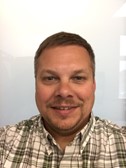 PhD is an Associate Professor in the Department of Environmental, Agricultural and Occupational Health at the University of Nebraska Medical Center and Nebraska Extension and works with projects through the NIOSH funded Central States Center for Agricultural Safety and Health. He has a diverse background in agricultural systems and engineering, specializing in the development of interventions and training programs, including the application of technology, to improve the safety and health of agricultural workers. Notably, his research has led to applications used to monitor and guide workers and automated systems including detecting early onset of heat illnesss and shutting down automated systems based on worker’ heart rates. Previously, he worked for Penn State Extension as an Extension Safety Associate. Yoder grew up in central Pennsylvania where he spent time working on his grandfather’s beef farm. He has a BS and MS from Pennsylvania State University in Agricultural Systems Management and a PhD from Purdue University in Agricultural and Biological Engineering. Dr. Yoder serves on the Board of Directors for the Grain Handling Safety Council as well as several other national boards and committees. (See Full Bio).
Presenter – Carlos Campabadal!
(Espanol – biografia) 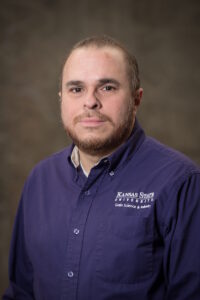 Dr. Carlos Campabadal, PhD, is a faculty member at Kansas State University Department of Grain Science and Industry. He is an extension specialist at the International Grains Program Institute (IGP) focusing on outreach in the areas of grain storage, quality and processing, U.S. grain grading and export systems, and feed manufacturing. He leads the Stored Product Protection Research group and is State Extension Leader of the Feed Technology group. Dr. Campabadal is active in international development with USAID and USDA in Central America and Africa. He has traveled throughout Latin America, Africa, Asia, and Europe as a technical consultant, translator and speaker in the areas of grain storage and feed manufacturing. Born and raised in Costa Rica, Central America Carlos worked for his family farm operation and feed mill company in process and maintenance engineering and animal farm management (beef cattle and swine) prior to his academic career and remains involved in the family business. (See Full Bio).